



The ordinance would raise the retirement age of New Castle County police officers from 55 to 57. (Photo by rwcar4 FLICKR)
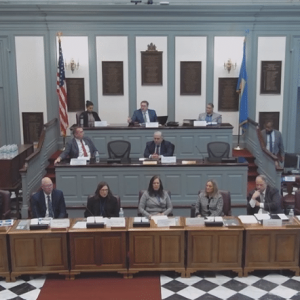
At the June 10 Public Safety Committee meeting, New Castle County Councilmembers discussed a proposed ordinance to increase the mandatory retirement age for county police officers from 55 to 57.
Introduced as Ordinance 25-084, the measure seeks to amend Chapter 26 of the New Castle County Code to support officer retention and align with trends in other jurisdictions.
“This ordinance comes to us from consideration from council, working with the executive office, and working with our friends in the police department and within the FOP, as well,” said Councilman Kevin Caneco.
“This raises the retirement age of New Castle County police officers from 55 to 57,” he said. “This is good, sensible legislation, that helps increase retention for some of our more senior officers.”
Caneco cited comparisons to police departments in Philadelphia, Baltimore, and New York City, where his father, Lieutenant Joseph Caneco, retired after 30 years of service, noting the shift would keep New Castle County competitive in retaining experienced officers.
“Those of us who have been in organizations, police organizations, military organizations, we know when you get to those senior levels, having that experience and having that knowledge on the force is beneficial,” Caneco said.

RELATED STORY: Delaware State Police Major Peter Sawyer retires after more than 30 years of service
Other councilmembers expressed support for the ordinance, including Councilman Penrose Hollins.
“I just want to compliment Councilman Caneco. I think he’s done his homework by reaching out to other jurisdictions. And I also believe that it is a benefit to this county and to our police force,” he said.
The Ordinance is scheduled to be considered by the full council on June 24.
Federal Retirement policy and law enforcement
While New Castle County explores raising the retirement age for local police, federal policymakers are also grappling with similar challenges. Many federal police officers, despite protecting federal property, personnel, and the public, are not classified under federal law as “law enforcement officers” eligible for enhanced pay and retirement benefits.
According to a 2023 report from the U.S. Government Accountability Office (GAO), around 12,600 federal officers across 17 agencies lack statutory retirement coverage, which includes a mandatory retirement age of 57 and higher pension multipliers. Most of these officers work for the Departments of Defense and Veterans Affairs, often outside Washington, D.C.
Seven agencies reported that the roles of federal officers have changed since 2014, due to increased threats, civil unrest, and staffing challenges. However, legal definitions have not kept pace with those evolving duties.
Congress requested the GAO study as part of the 2023 appropriations act to consider policy updates, but changes remain complex. Key questions include whether any new benefits would apply retroactively, how physical standards should be addressed, and the budgetary impact, especially with retirement contributions potentially rising from 16.6% to over 35% of pay.
The conversation at the local level mirrors these national concerns: how to maintain a skilled law enforcement workforce while balancing financial responsibility and long-term personnel planning.
RELATED STORIES:
![Redding Consortium members meeting around a U-shaped table.]()
Redding Consortium Recommends Single Northern New Castle County School District
12/17/2025![Holiday Model Railroad Return to Brandywine Museum of Art, Blending Art, Tradition and Family Magic]()
Holiday Model Railroad Return to Brandywine Museum of Art, Blending Art, Tradition and Family Magic
12/17/2025![Echoes Brings Pink Floyd’s Legendary Sound to The Queen Theatre This Weekend]()
Echoes Brings Pink Floyd’s Legendary Sound to The Queen Theatre This Weekend
12/16/2025![Bardea Blend Brings Wilmington’s Creatives Together on December 18]()
Bardea Blend Brings Wilmington’s Creatives Together on December 18
12/16/2025![Kirily of Make & Mellow Named Downtown Wilmington’s December Customer Service Champion]()
Kirily of Make & Mellow Named Downtown Wilmington’s December Customer Service Champion
12/16/2025![Delaware Lawmakers, School Officials Tackle Property Reassessment and School Funding Reform]()
Delaware Lawmakers, School Officials Tackle Property Reassessment and School Funding Reform
12/15/2025![A Last-Minute Gift Shopper’s Dream: Brandywine Holiday Festival of the Arts Returns]()
A Last-Minute Gift Shopper’s Dream: Brandywine Holiday Festival of the Arts Returns
12/15/2025![A Quieter Holiday Moment Awaits at Rockwood Park & Museum]()
A Quieter Holiday Moment Awaits at Rockwood Park & Museum
12/15/2025







Claudia is a Philadelphia-based journalist and reporter passionate about storytelling that informs and engages the community. Claudia, a proud Temple University graduate, has built a career covering impactful stories and creating compelling content across digital and print media platforms. With a strong background in writing, editing, and research, Claudia has worked on various topics, from local news to in-depth features, always striving to deliver meaningful and accurate reporting.
Share this Post