

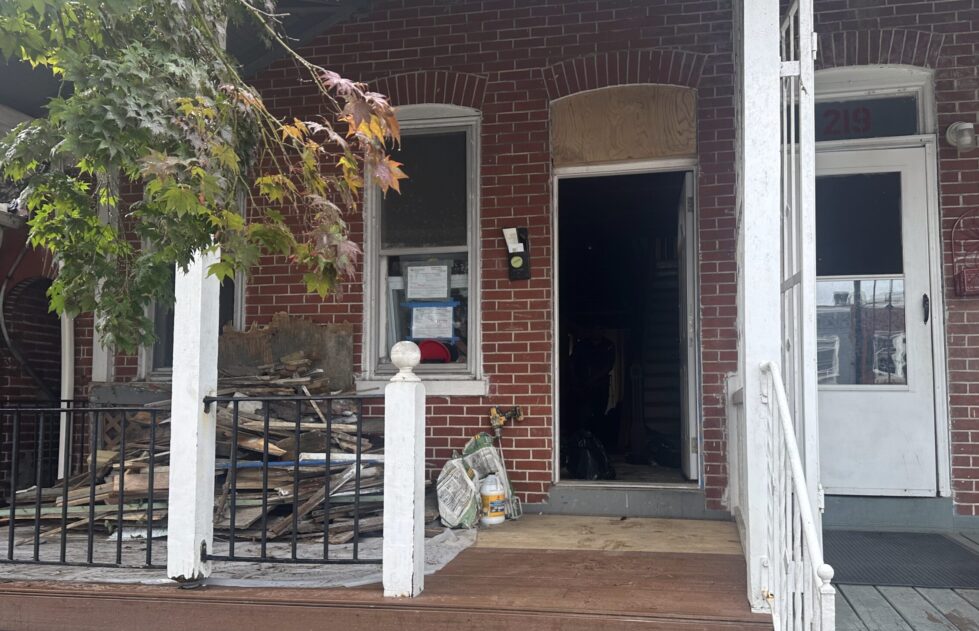


A home under construction in Wilmington’s Hilltop neighborhood, part of the Wilmington Neighborhood Conservancy Land Bank’s ongoing efforts to revitalize vacant properties through its Lower Hilltop Affordable Housing Initiative. (Photo by Claudia Estrada)
Wilmington City Council is weighing whether to dismantle the Wilmington Neighborhood Conservancy Land Bank, but supporters of the Land Bank say critics are ignoring key facts.
The push to dissolve the Land Bank follows a 2024 audit that flagged weaknesses in financial controls and governance. Councilmember Shané Darby introduced legislation to dissolve the agency, calling the audit evidence of “severe mismanagement.”
Bud Freel, who became the Land Bank’s president in 2025, said the findings were serious but fixable.
“Everything fell behind. Our financials were behind everything,” Freel said.
He explained that in March of 2024, the bank hired a new financial staffer who helped stabilize things, which he credits as a major step forward.
“I think it’s been a very successful project. And I’m very pleased with it.”

READ: Wilmington council weighs dissolving Land Bank as audit sparks accusations
Audit Findings and Leadership Response
The performance audit, conducted by Prospero Consulting, cited delayed reporting—2021 and 2022 financial statements weren’t finalized until mid-2024—and found only six of 33 balance sheet accounts had been reconciled. It also flagged over $200,000 in misclassified expenses, no procurement policy, and weak internal controls.
Wilmington City Auditor Terrance Williams, who conducted the audit, said his office treated the Land Bank like any other engagement.
“We try to be as transparent as possible,” he said. “What I look for is whether management is going to mitigate the findings. And that’s what the Land Bank did.”
Williams emphasized that audits are intended to improve performance, not punish agencies.
“Yes, there were findings. But management was proactive. So they shouldn’t have those same problems now.”
Freel said the audit reflected growing pains as the Land Bank matured from a startup into a larger operation.
“There were like 1,500 vacant properties in the city. That’s overwhelming. And you try to do a whole city at the same time, where you do one here and one here. You don’t have any impact,” he said. “So what we wanted to do was change this community.”
Freel noted they’ve since added a procurement policy and begun updating their bylaws, which are still in progress. A revised conflict-of-interest policy is also underway.
“It was what it was, and we said, we’re going to get this cleaned up, and we did. We worked really hard,” he said.
Revitalization in Lower Hilltop
The Land Bank focuses on acquiring and repurposing vacant, abandoned, and tax-delinquent properties, often for affordable homeownership or community redevelopment. One major initiative is in the Lower Hilltop neighborhood on Wilmington’s West Side.
“We’ve changed the homeownership rate here from about 18% just on this block to about 40%,” Freel said.
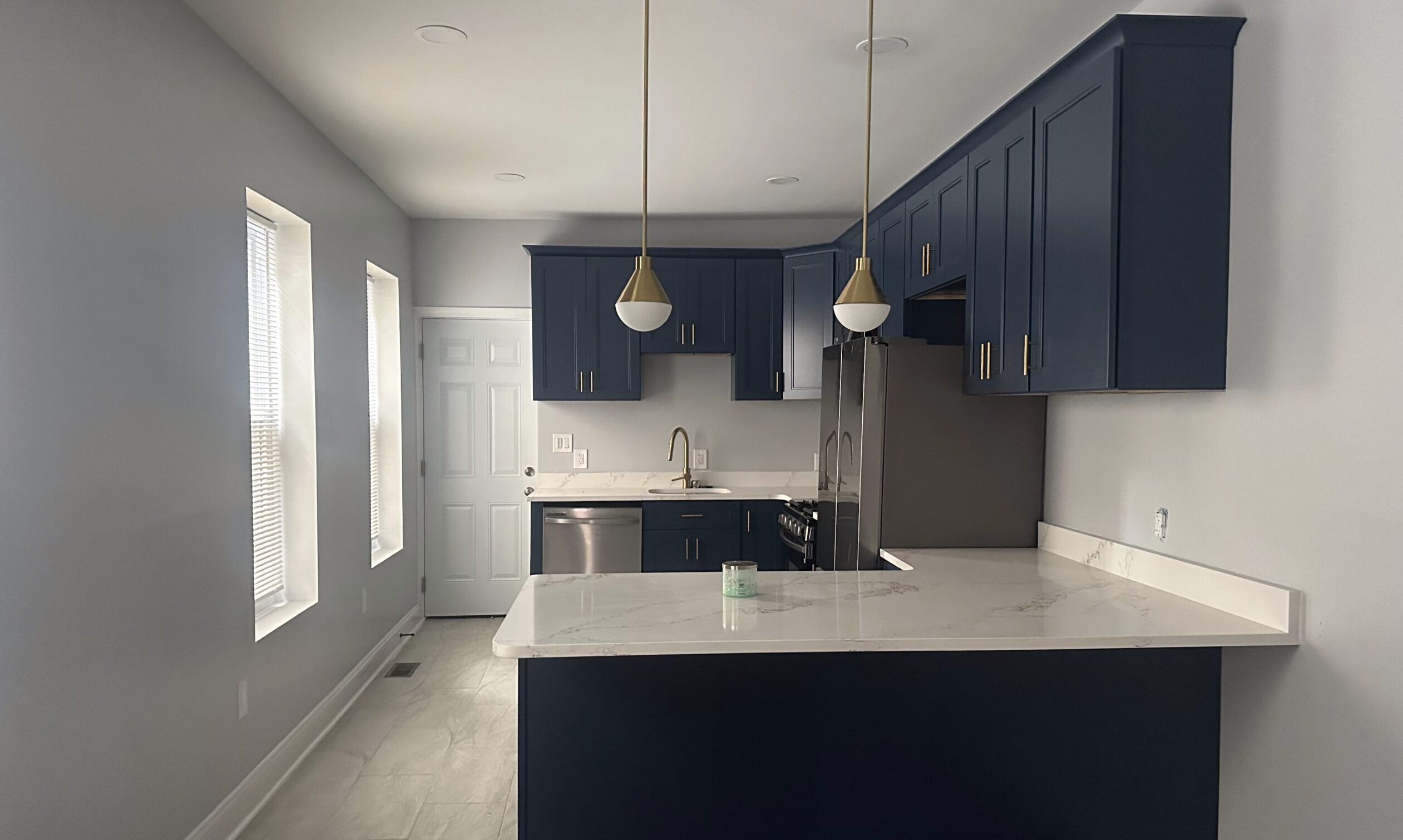
A remodeled kitchen inside one 3 bedroom home rebuilt by the Land Bank. (photo by Claudia Estrada)
The Lower Hilltop Affordable Housing Initiative, launched in 2022, aims to rehab up to 80 vacant units along contiguous streets near the 4th Street corridor. The area, long underserved, has struggled with declining property values, high crime, and substandard rentals. So far, about $6 million has been invested, including an initial $1.8 million, and seven homes have been completed on North Harrison Street.
RELATED STORY: Cinnaire closes $340M fund for affordable housing, including Wilmington’s Imani Village
Controversy Over Gibraltar Mansion
While the Land Bank has focused on areas like Lower Hilltop, some critics have pointed to the historic Gibraltar Mansion as a distraction from its core mission. Freel said that’s a misunderstanding.
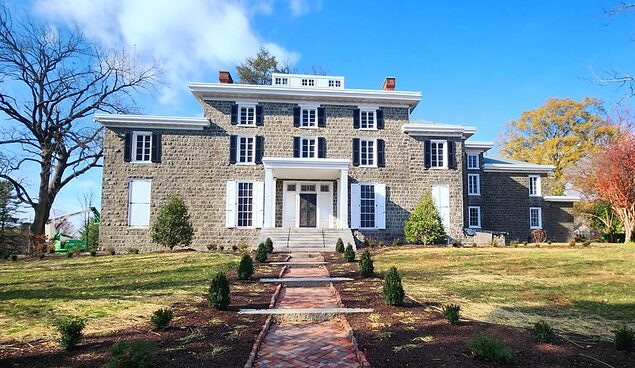
The Gibraltar Mansion (photo by skybeing FLICKR)
Vacant for over 30 years, Gibraltar was acquired by the city under former Mayor Mike Purzycki, who urged the Land Bank to hold the property.
“I said, I’m okay, but we are not spending one dollar that the Land Bank raises on this property,” Freel said. “He’s got to get the money.”
Instead, the city secured $2 million in state Bond Bill funding for repairs. The Land Bank processes invoices, but all spending is reviewed and approved by the city. “Not a single dollar we raised is going to Gibraltar,” Freel explained.
While some neighbors have raised concerns and pushed for a formal public hearing, Freel said a public meeting was held in May with more than 100 attendees, including supporters and critics.
“I didn’t close the meeting until everybody had their chance to speak,” he said.
What’s Next: Council Vote on July 3
On Thursday, July 3, the Wilmington City Council will vote on Ordinance 25‑026‑0059, which seeks to amend Chapter 2 of the City Code to dissolve the Wilmington Neighborhood Conservancy Land Bank.
If approved, the ordinance would legally terminate the Land Bank, transferring its assets—including properties and remaining funds—to the city.
RELATED STORIES:
![Redding Consortium members meeting around a U-shaped table.]()
Redding Consortium Recommends Single Northern New Castle County School District
12/17/2025![Holiday Model Railroad Return to Brandywine Museum of Art, Blending Art, Tradition and Family Magic]()
Holiday Model Railroad Return to Brandywine Museum of Art, Blending Art, Tradition and Family Magic
12/17/2025![Echoes Brings Pink Floyd’s Legendary Sound to The Queen Theatre This Weekend]()
Echoes Brings Pink Floyd’s Legendary Sound to The Queen Theatre This Weekend
12/16/2025![Bardea Blend Brings Wilmington’s Creatives Together on December 18]()
Bardea Blend Brings Wilmington’s Creatives Together on December 18
12/16/2025![Kirily of Make & Mellow Named Downtown Wilmington’s December Customer Service Champion]()
Kirily of Make & Mellow Named Downtown Wilmington’s December Customer Service Champion
12/16/2025![Delaware Lawmakers, School Officials Tackle Property Reassessment and School Funding Reform]()
Delaware Lawmakers, School Officials Tackle Property Reassessment and School Funding Reform
12/15/2025![A Last-Minute Gift Shopper’s Dream: Brandywine Holiday Festival of the Arts Returns]()
A Last-Minute Gift Shopper’s Dream: Brandywine Holiday Festival of the Arts Returns
12/15/2025![A Quieter Holiday Moment Awaits at Rockwood Park & Museum]()
A Quieter Holiday Moment Awaits at Rockwood Park & Museum
12/15/2025




Claudia is a Philadelphia-based journalist and reporter passionate about storytelling that informs and engages the community. Claudia, a proud Temple University graduate, has built a career covering impactful stories and creating compelling content across digital and print media platforms. With a strong background in writing, editing, and research, Claudia has worked on various topics, from local news to in-depth features, always striving to deliver meaningful and accurate reporting.
Share this Post